
Tree & Plant Installation
Planting fails in its first year for unglamorous reasons: set too deep, spaced too close, or dropped into a hole that holds water like a bucket. We dig wide rather than deep, set the root flare at or slightly above grade, cut any roots that have circled the pot, and backfill with native soil instead of a rich pocket that roots refuse to leave. On clay we check the hole actually drains before anything goes into it.
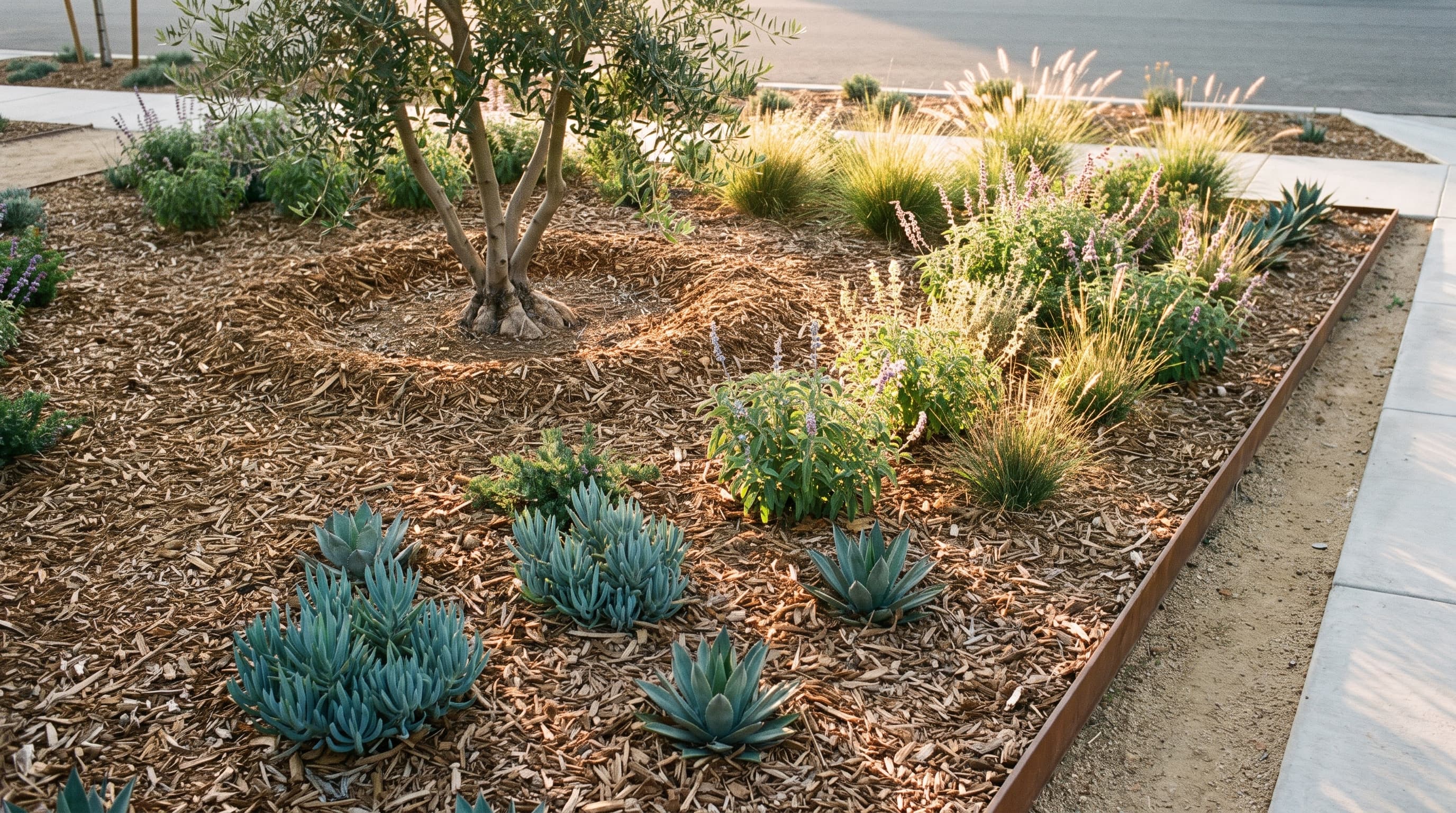
Layout is where a yard either grows into itself or grows into a mess. We space to mature size rather than to how it looks on delivery day, which means a new bed looks a little sparse and then fills in correctly, instead of looking full immediately and needing half of it torn out in three years. Plants are grouped by water need so one irrigation zone can serve them honestly, and mature heights are kept off your windows and back from the walk.
Trees get the most care because they are the hardest thing to redo. We set them plumb, stake only where the trunk genuinely needs it and with ties loose enough to let it flex, and pull the stakes once it can stand on its own — a permanently staked tree never builds the taper that holds it up. Everything finishes with a mulch ring held back off the trunk, because mulch piled against bark is how you rot a young tree slowly.
What’s included
- Layout staked and walked with you before anything goes in the ground
- Holes dug wide rather than deep, drainage checked on clay
- Root flare set at or slightly above grade, circling roots cut
- Backfilled with native soil rather than an amended pocket
- Spacing to mature size, grouped by water need to match irrigation zones
- Trees set plumb, staked only where needed and released once established
- Shredded wood-chip mulch, held back off trunks and crowns
- Drip emitters sized and placed at each plant
Common questions
Why do the new beds look so empty?
Because they are spaced for what the plants become, not what they are in the pot. Planting to look full on day one means pulling half of it back out in a few years, or living with a bed that crowds and shades itself. It fills in faster than you would expect, and it fills in correctly.
What survives here without much water?
More than most people expect. Agave, rosemary, salvia, ornamental grasses, and a long list of Mediterranean and California natives handle our summers on very little once established. Established is the operative word — nearly everything needs real water through its first year regardless of how drought-tolerant it is afterwards.
Will you plant something my dog will not destroy?
We can plan around it. Tough, resilient planting along the run lines, the more delicate things where the dog does not go, and nothing from the common toxic list within reach of a chewer. Tell us the dog habits on the walk and it changes the plan.
Do you guarantee the plants?
We stand behind how they are planted, and we will tell you honestly when a loss is an installation problem rather than a watering one. Most first-year losses come down to water — too little, or far more often too much — which is why we set the irrigation and the schedule as part of the job instead of leaving it to chance.
Tell us about your project
Send a few details about what you want built and we will get back to you to set up a free on-site estimate.