
Sprinkler & Drip Irrigation Installation
Most irrigation problems are zoning problems. Rotors and spray heads put water out at completely different rates, so putting them on one valve guarantees half the yard drowns while the other half stays dry. We zone by plant type, sun exposure, and precipitation rate, so every station can run for the time its own area needs instead of a compromise that suits none of it.
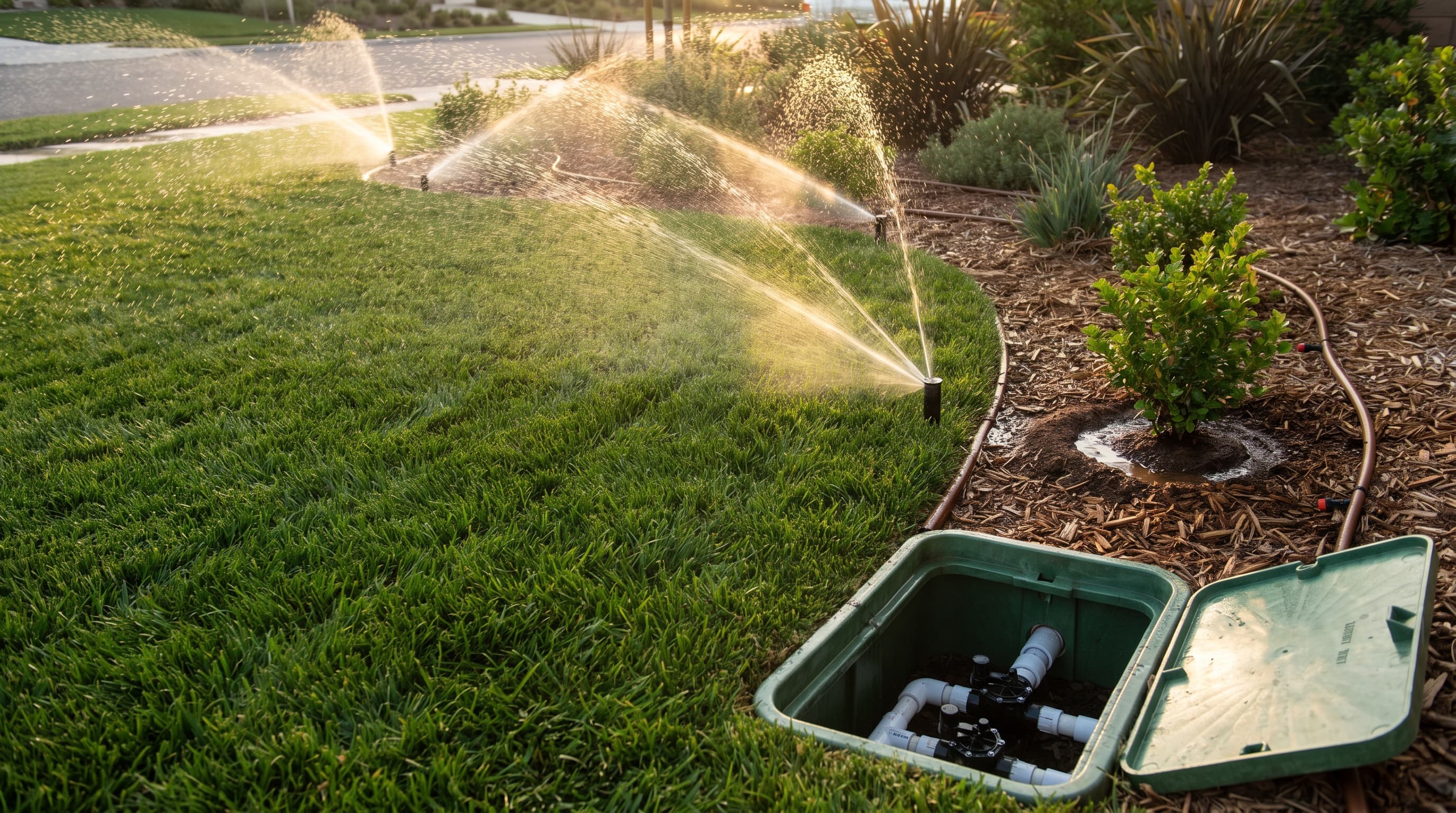
In planting beds, drip beats spray. Emitters at the root ball put water where the plant uses it instead of throwing it across mulch and hardscape to evaporate or feed weeds. We size emitters to the plant, run tubing under the mulch, and fit a filter and pressure regulator at the valve — the two parts most often left off, and the two most common reasons a drip system clogs or blows its fittings.
Lawn zones get head-to-head coverage, because a sprinkler that reaches most of the way to the next head leaves a dry ring you will stare at all summer. We set arc and nozzle at commissioning, hunt down the low head draining the line after every cycle, and program the controller standing next to you. You should finish the walkthrough knowing which station is which and how to shut one off.
What’s included
- Zoning by plant type, sun, and precipitation rate rather than convenience
- Head-to-head coverage on lawn zones, arcs and nozzles set at commissioning
- Drip in planting beds with emitters sized to each plant
- Filter and pressure regulator at every drip valve
- Tubing run under the mulch rather than across it
- Valve boxes set flush and findable, not buried
- Controller programmed and walked through with you, station by station
- Backflow protection suited to the connection — requirements vary by city, confirmed during the estimate
Common questions
Can you fix what I have instead of replacing it?
Often, yes. Plenty of systems only need re-zoning, new nozzles, and a controller that is not fighting itself, and we would rather repair a sound system than sell a new one. When the mainline is failing or the zoning is fundamentally wrong, patching it only moves the problem, and we will say so plainly.
How often should it run?
Less often, and for longer, than most controllers are set to. Short daily cycles keep roots shallow, which is exactly what makes a lawn or a shrub fragile in a heat wave. We set a starting schedule by season and show you how to move it. Drip zones run on a completely different clock from lawn zones, which is the whole reason they are separate valves.
Will a smart controller actually save water?
It helps, if the zoning underneath it is right. A weather-based controller sitting on a badly zoned system just waters the wrong thing more intelligently. Fix the zones first and a smart controller is well worth having.
Do I need a backflow device or a permit?
Backflow protection depends on how the system ties into your supply, and what is required varies by city. We confirm exactly what applies to your property during the estimate rather than guessing at it here.
Tell us about your project
Send a few details about what you want built and we will get back to you to set up a free on-site estimate.