
Paver Driveway & Patio Installation
A paver field is only as good as what sits under it. We excavate to depth, compact an engineered aggregate base in lifts, and screed a flat bedding course before the first paver goes down. Base depth is not one number. A patio holding a table needs less than a driveway parking a loaded truck, and we set it by what the surface has to carry and how the soil under it behaves.
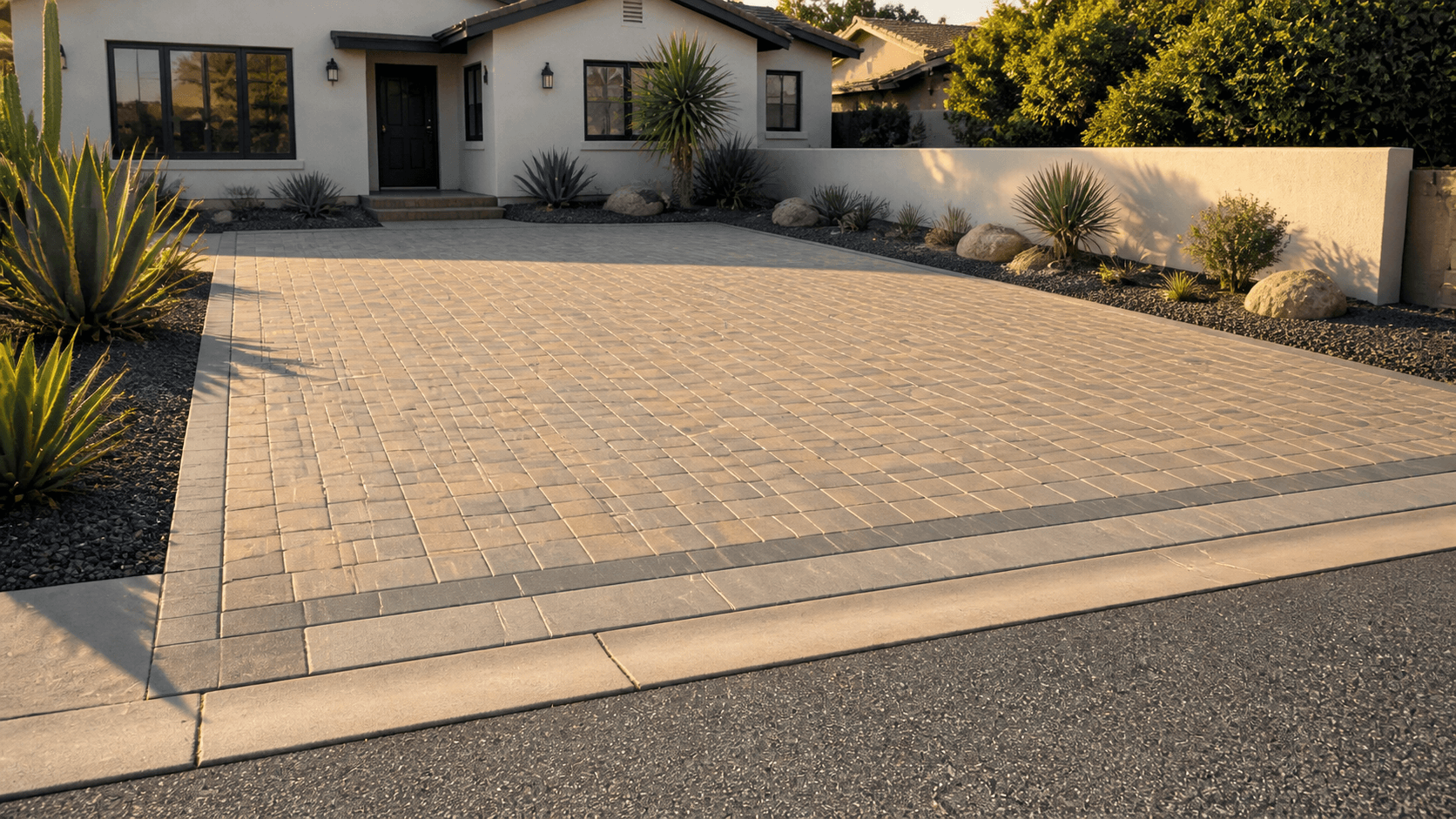
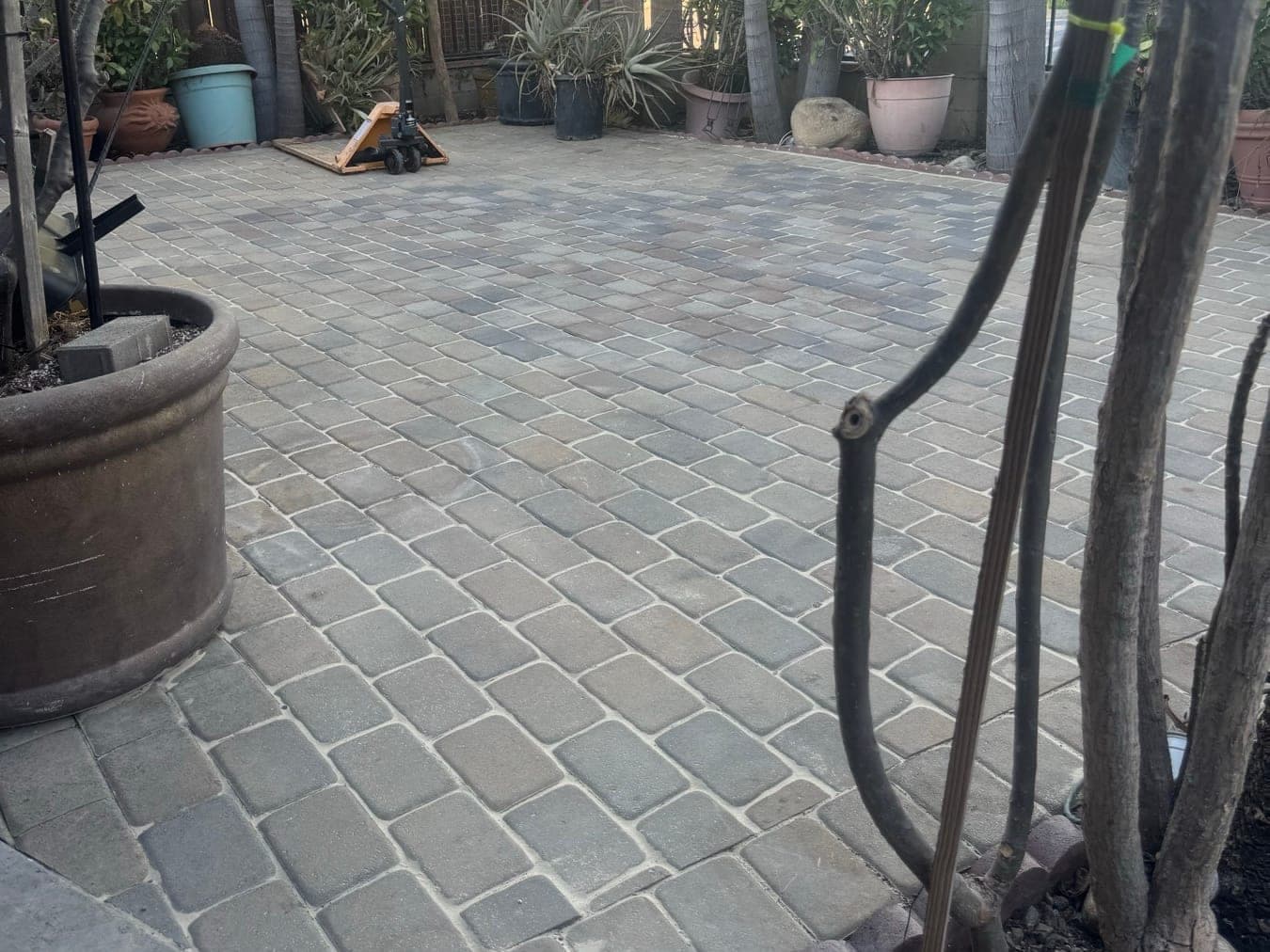
Pavers get set tight, cut clean at the borders, and locked in with an edge restraint so the field cannot creep. Then polymeric sand is swept into the joints and set with water. It hardens enough to keep weeds and ants out and to stop the sand washing away every time it rains or you run a hose. It is not permanent, and it gets topped up every few years, but that is a sweep-and-set afternoon, not a repair.
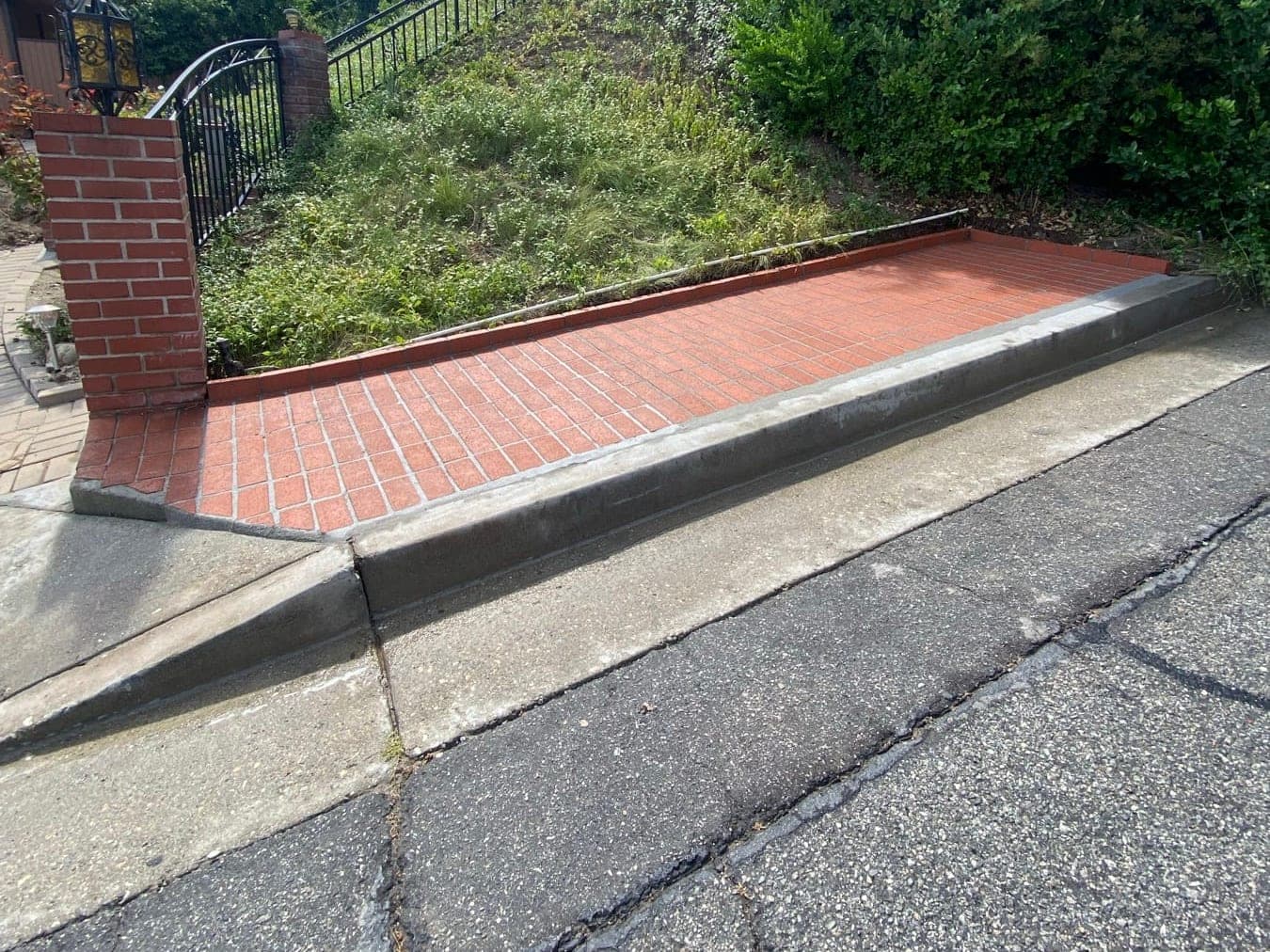
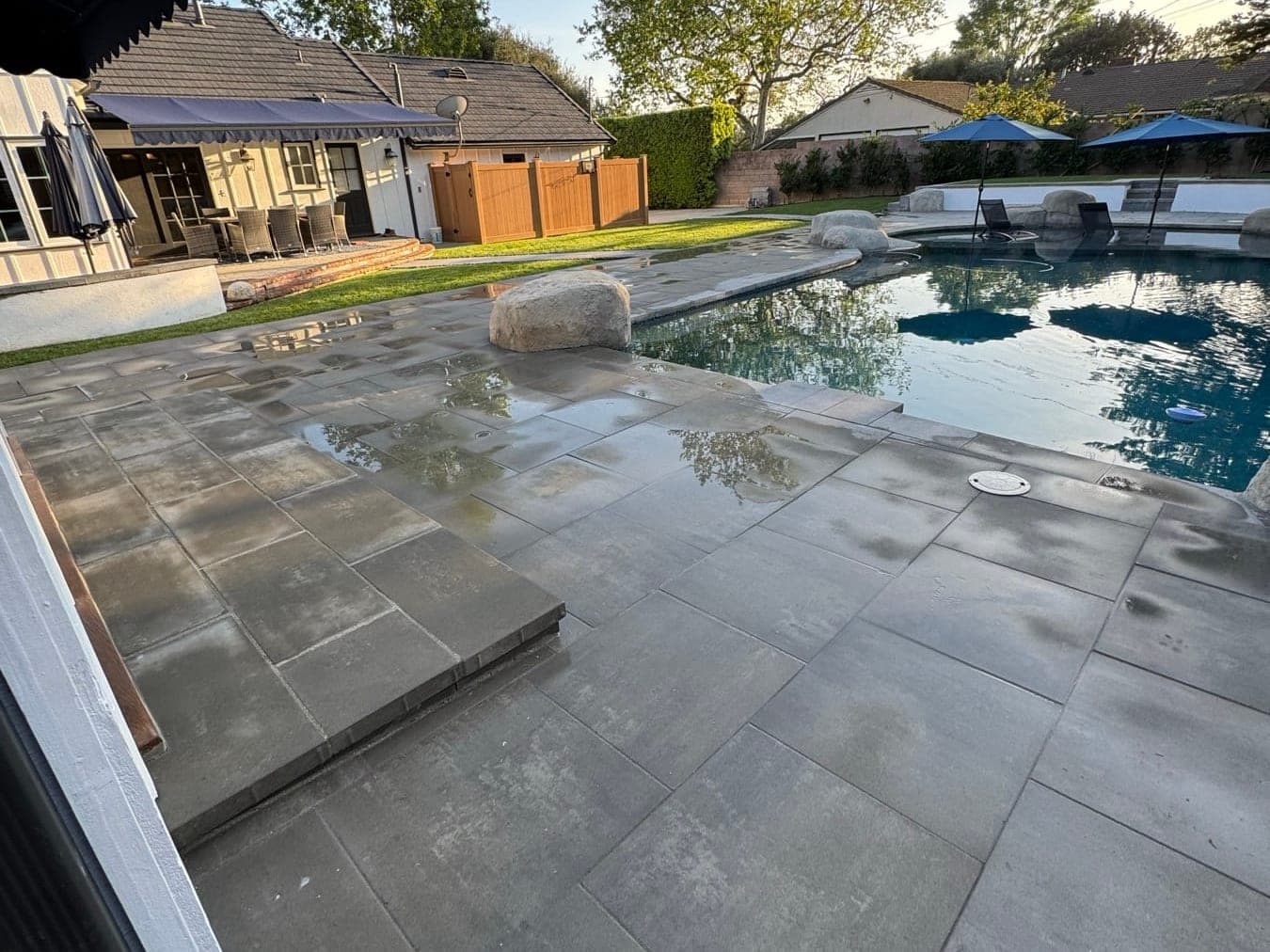
The reason to choose pavers over a slab is movement and repairability. Individual units flex with the ground instead of cracking across it, and when something does settle — a utility trench, a soft spot in the soil — we pull the pavers up, fix the base, and set the same pavers back down with no patch showing. Permeable systems are the other reason: open-graded joints let rain pass through the surface into the base instead of running off your property. Some cities give credit for that on drainage. Whether yours does varies by city, and we confirm during the estimate.
What’s included
- Excavation, subgrade prep, and haul-off of spoils
- Engineered aggregate base compacted in lifts, with depth set by the load it carries
- Screeded bedding course and slope checked for drainage before laying
- Clean wet-saw cuts at borders, corners, and obstacles
- Edge restraint on every open edge so the field cannot spread
- Polymeric sand swept and set to lock the joints against weeds and washout
- Permeable paver systems where you want rain to pass through instead of run off
- Soldier-course borders, banding, and inlays in a contrasting paver
Common questions
What happens if a paver settles, cracks, or gets stained?
We lift the affected pavers, correct whatever the base is doing, and set them back down. That is the whole advantage over a slab: the repair disappears instead of leaving a patch. We leave you a few spare pavers from the same run in case one ever needs swapping for good.
Pavers or poured concrete?
Pavers take more labor to install and a little upkeep, since the joint sand gets refreshed every few years. Concrete is one surface with less to maintain, but when it cracks you patch or replace a section and the repair shows. If you want it repairable and you do not mind the sand, go pavers.
Do weeds grow up between pavers?
Not from underneath, if the base and the joints are done right. Polymeric sand locks the joints and the edge restraint keeps the field tight. What you occasionally get is seed blown onto the surface that sprouts in the top of a joint, and that sweeps or pulls out.
How soon can I use it?
Pavers do not cure. Once the joints are set and the edges are locked, you can walk on it that day and drive on it as soon as we are off the site.
Tell us about your project
Send a few details about what you want built and we will get back to you to set up a free on-site estimate.